Showing posts with label Faith. Show all posts

Sunday, March 24, 2024

John 18:28-19:16: Pilates at 6am

Presented to The Salvation Army Alberni Valley Ministries, 24 March 2024 by Major Michael Ramsay. The original version was presented to the Swift Current Corps of The Salvation Army, 03 Feb 2013


This is the BC 2024 version, You can view the original Saskatchewan 2013 version here: https://sheepspeaks.blogspot.com/2013/02/john-1828-1916-pilates-at-6am.html 


I know it is Palm Sunday today but nonetheless I am going to start our time today with a Christmas story:


There is this boy. He starts out writing a letter to Santa but then realises that he will get better results if he writes directly to the Lord. So he writes: ‘Dear Santa (crossed out). ‘Dear Jesus, I have been good for six months; please give me what I want for Christmas.’ He thinks a minute. Crosses it out and writes, ‘Dear Jesus, I have been good for one month; please give me what I want for Christmas.’ He thinks a minute. Crosses it out and writes, ‘Dear Jesus, I have been good for a week; please give me what I want for Christmas.’ He thinks a minute. Crosses it out and writes, ‘Dear Jesus, I have been good for a whole day; please give me what I want for Christmas.’ He thinks a minute and as he is thinking, he spies a nativity scene. He walks over to it. He picks up the statue of Mary and he walks back over to his desk. He places her in front of him; he picks up his pen again and he writes, ‘Dear Jesus… if you ever want to see your mother again…give me what I want for Christmas.’


Today’s pericope (John 18:28-19:16) is also about violent and awkward situation. Here we have the Jewish leaders bringing Jesus before Governor Pontius Pilate to receive his death sentence.  We remember the historical setting and the political situation at this time of Palestine. The Romans are the superpower of the day and the Romans are occupying Judea. They conquered Israel by force and their forces are stationed all over the country. Just like in the nations that the US occupies today, some people are fine with it, conspiring with the occupiers to achieve and maintain position and privilege and some people are not: they are looking for an opportunity to revolt. The Pharisees, the Sadducees, the Priests and officers conspire with the Romans and they receive the power to exercise their authority by submitting to Rome. Others however do not. The Sicarii, the Zealots, they are like today’s suicide bombers. They are terrorists. They walk through the crowded marketplaces looking for Romans to stab with their short, concealed Sicarii knives. When our story today is taking place, there are a lot of crowds for people to walk through. It is Passover in Jerusalem and hundreds of thousands or even by some accounts millions of visitors are pouring into Jerusalem.


Governor Pontius Pilate, who is the leader of the Roman forces in Judea, does not normally reside in Jerusalem. He is usually posted in Caesarea Maritima but it is the Passover so many Jews are descending on Jerusalem for the Passover.


It would be like when the Olympics came to Vancouver. The city was seemingly completely full. In preparation for the event, they even flew people with criminal warrants back to the cities from which they came and the city imported police officers from all over the country to help with policing all of the visitors. Now imagine that the next Olympics are to be held in Kabul, Afghanistan; Baghdad, Iraq or some other US-occupied country; Imagine they are held in Palestine or Kiev. Think of all the extra security forces that would be needed. This is the situation in Jerusalem. Governor Pontius Pilate who usually resides in a fortress in a different city comes to oversee the crowd control. He and Rome are afraid of the potential for a Jewish revolt as all these people are converging on their ancient capital city.[2]


It is this situation that the Jewish leaders, the chief priests and officers, decide to capitalize on (cf. John 11:45-57). They want Jesus dead. Jesus has been making problems for them. Jesus has been attracting massive crowds. Jesus has been apparently challenging them at every possible opportunity. In the book of John here it is no secret that Jesus is the Messiah. The Messiah is the one to deliver his people. He is to deliver the people from their occupiers. The religious leaders are afraid that Jesus will start a rebellion that will not only cost them their privileges under the Romans but will also cost many innocent people their lives (cf. John 11:49-52). Jesus, in their eyes, is their adversary and this is the opportunity to get rid of him for good. They decide to bring Jesus to Governor Pontius Pilate, accuse him of treason and have the Romans kill him.


Now this is interesting. We know from the scriptures that there are times when mobs of Judeans had picked up stones to kill Jesus (John 8:32, 10:59) and we know that one such mob would later kill Stephen (Acts 7:54–60); so, why did the Jewish leaders need the Romans to kill Jesus for them? We know this was needed to fulfill prophecy (Deuteronomy 21:23; John 3:14, 8:28, 12:32–33) but there were other reasons: One is that the Jewish leaders were afraid of the people. They were afraid of what would happen if they seized Jesus and executed him publicly so instead they grabbed him at night in the garden, held their trials for him and then first thing in the morning, as soon as the governor began work – which was probably before six o’clock in the morning by the way - still under the cover of darkness, they bring Jesus to the Romans.[3] This way if the Romans kill Jesus, the Jewish leaders can easily say to the people that it wasn’t them. And we must remember also that because Judea is an occupied territory, the Jewish authorities don’t really have the authority to execute anyone [4] Sometimes the Romans would turn a blind eye to their unauthorized executions in order to maintain order. But during the Passover, with so many forces stationed in Jerusalem, it probably wouldn’t be worth the risk and – like we said – with the Jewish leaders bringing Jesus to Pilate to be condemned, this way the Romans could take the blame for killing this popular leader so they can be both rid of Jesus and off the hook for his murder. This is the scene in the pericope before us today.


Now Verses 28-38 show some very interesting parts of Pilate’s interview of Jesus and his relationship with the Jews. At first it reads as if Pontius Pilate is annoyed by the Jews. Here they are arriving at his doorstep, at the beginning of his workday at 6am, at Passover season, which is the busiest time of the year for him. He interviews Jesus but doesn’t seem to have any patience with the Jews at all. After the interview, Verses 38-40: “…With this he went out again to the Jews gathered there and said, “I find no basis for a charge against him. But it is your custom for me to release to you one prisoner at the time of the Passover. Do you want me to release ‘the king of the Jews’? They shouted back, ‘No, not him! Give us Barabbas!’ Now Barabbas had taken part in an uprising.”


Here is an interesting tangent. Does anybody know any Aramaic? Do you know what the murderous revolutionary’s name Barabbas means? Break it into the two parts: part 2 is ‘Abba’; what does ‘Abba’ mean? ‘Abba’ means father. ‘Bar’ means ‘Son of’. Therefore, Barabbas means ‘son of the father’. So ironically, Jesus who is ‘the Son of the Father’ dies in place of Barabbas whose name means ‘son of the father’. But that is a side note; let us return to our story.


Pilate and the Jewish leaders are having a bit of a standoff. The Jews want Rome to execute Jesus and the leader of the Roman forces in Jerusalem is not really interested in this for two or three reasons. We know from Matthew’s account that Pilate’s wife has had a vision that would make him not want to kill Jesus (Matthew 27:19) and we know from non-Biblical historical documents that Pilate didn’t really like the Jews and he ruled with an iron fist.[5] Pilate, I think, knows what the Jewish leaders are up to; he doesn’t like them and he doesn’t want to be dictated to by a conquered and an occupied people. He is Roman. Rome is the Superpower of the first Century. They are the Americans of their day. They are not going to be dictated to by a subjugated people.


Chapter 19 begins with Pilate possibly thinking that he can just brush this whole thing aside still; he has just tried to release a convicted revolutionary in place of an accused revolutionary but to no avail. Now he resorts to having Jesus beaten. This beating can take place for one of two reasons. One, they did often beat people before crucifixion; or two, they would also beat people in place of crucifixion as a form of brutal humiliation. Given that Pilate ordered this beating and then humiliated him further by having Jesus dressed in a robe with a crown of thorns, this was probably an attempt to avoid signing Jesus’ death warrant and to get rid of these pesky Jewish leaders before they cause some real problems for Pilate.[6]


Now in the lines that follow, John 19:12ff., Pontius Pilate is still apparently trying to decide what to do and Jesus isn’t really helping any by refusing to answer certain questions. The Jewish leaders and their mob are getting anxious and no doubt impatient as time goes on. They need this done quickly before anyone might form a rival mob and come to Jesus’ aid; so they push Pilate’s buttons. They know how to get to the governor and they do.  They say to Governor Pilate, Verse 12, “... If you let this man go, you are no friend of Caesar. Anyone who claims to be a king opposes Caesar.” The implication here is not subtle; it is that if he does not order Jesus’ execution they will write to his boss, the Emperor in Rome, saying that Pilate let a revolutionary live who was trying to lead a revolt against Rome and as the Roman Emperor at this time seemed somewhat paranoid in general and was not afraid to act militarily at the first perceived threat, Verse 13, “When Pilate heard this, he brought Jesus out and sat down on the judge’s seat at a place known as the Stone Pavement (which in Aramaic is Gabbatha).”


This next part is the part that I want to focus on. It is where we can ask ourselves what is the author of John telling us in the text here and what is God doing here in this story?


We know that the Romans promoted, among other things, an Emperor cult.[7] The Emperor was worshiped as a god. These Jews have just let Pilate know that if he does not kill Jesus, they will report him as supporting a rebellion against his own god-king. Pilate’s response is as masterful as it is vengeful, as it is tragic for the Jews. Verses 14-18:


     It was the day of Preparation of the Passover; it was about noon. “Here is your king,” Pilate said to the Jews.

     But they shouted, “Take him away! Take him away! Crucify him!”

     “Shall I crucify your king?” Pilate asked.

     “We have no king but Caesar,” the chief priests answered. Finally Pilate handed him over to them to be crucified.


“Shall I crucify your king?” Pilate asked. “We have no king but Caesar,” the chief priests answered. Do you know what Pilate has just done here to the Jewish leaders? Do you know what the religious leaders have just done? They have just denied their God. In effect the Jewish leaders said to Pilate that if you do not give the orders crucify Jesus we will tell your god-king Caesar that you are disloyal to him; so Pilate responds by saying to these Jews that if you want me to crucify Jesus, you must first deny your God-King. When Governor Pilate got the Jewish religious leaders to confess that “We have no king but Caesar”, that is exactly what they were doing – denying YHWH, the LORD, God.


This is Passover. Every Passover the Jewish people concluded the great Hallel (Psalms. 113–118) with this prayer: ‘From everlasting to everlasting thou art God; beside thee we have no king, redeemer, or saviour; no liberator, deliverer, provider; none who takes pity in every time of distress or trouble. We have no king but thee.’[8] The Jewish leaders here are not only indirectly disowning God by rejecting Jesus but they are also openly and actively rejecting God in this scene by saying that they have no king by Caesar (cf. John 1:11).


The Chief Priests and Officers want this big problem of Jesus removed from their lives so much that they are willing to disavow God in order to do it. This is what the Jewish leaders have done. What profits a man to inherit the whole world and yet forfeit his soul (Matthew 16:26; Mark 8:36)? This is a tragedy of this story. He came to his own but they did not accept him (John 1:11). The Jewish leaders rejected God and we know that for many this rejection continued. God came to them in their time of need but they thought that they could deliver themselves from their suffering; so, rather than rely on God, they rejected him and suffered without Him. Did God leave them? No, they - the Jewish Chief Priests, Officers, et el. - left God and so they did not have Him.


The question for us today then is this: When life starts to get out of hand, when –like the Jewish leaders - there is nothing that we can humanly do; when tragedy strikes our life, do we turn to God and live or do we turn on God and die. Do we turn to God and live or do we turn on God -in our own anger, vengeance, self-pity or arrogance- and suffer the consequences?


I want to bring one more thing to our attention here. Immediately preceding the Jewish leaders’ denial of Christ in our story is Peter’s three-fold denial of Jesus (John 18). We are all familiar with that. As surely as the Jewish authorities here openly and publicly disavow God’s lordship, Peter, just prior to this episode denies Christ for a third time (John 18:27) – but Peter, after the resurrection, in a couple of chapters will be reinstated and Peter will not deny Christ again, he will follow him even unto death (John 21:9-19). Peter will confess his sin and Peter will be saved.


Today is Palm Sunday. Today is the day we celebrate people welcoming Jesus as King. Today we have the same opportunity, the same choice. As our life comes crashing down around us, as trials and tribulations mount, as enemies and adversaries seem to be raised up from every corner of our world, as our life becomes overwhelming, it is like we are in the courtyard with Jesus and we can either turn on him by indulging in and holding onto our anger, our rage, our righteous indignation, and our own self-pity or we can turn to him and live. So today when life is difficult, let us take courage and let us turn to him who is able, more than able to accomplish what concerns us today. Let us turn to him who is able, more than able to handle anything that comes our way. When life is difficult, let us turn to him who is able, more than able to do much more than we could ever dream. Let us turn to him who is able, more than able to make us what He wants us to be. He is able. Amen.


Let us pray.

www.sheepspeak.com

www.facebook.com/salvogesis

.---

[2] Kruse, Colin G.: John: An Introduction and Commentary. Downers Grove, IL : InterVarsity Press, 2003 (Tyndale New Testament Commentaries 4), S. 351

[3] cf. William Hendricksen, John, New Testament Commentary, (Grand Rapids, Mi: Baker Academic, 2007), 400

[4] Gail R. O’Day, The Gospel of John, The New Interpreter's Bible, Vol. 9, ed Leander E. Keck, et. al. (Nashville, TN: Abingdon Press, 1995),820.

[5] Gerard Sloyan, John, Interpretation: A Bible Commentary for Teaching and Preaching, ed. James L. Mays, et. al. (Atlanta, Georgia: John Knox Press, 1988), 204, Gail R. O’Day, The Gospel of John, The New Interpreter's Bible, Vol. 9, ed Leander E. Keck, et. al. (Nashville, TN: Abingdon Press, 1995), 815

[6] Colin G. Kruse, John: An Introduction and Commentary. Downers Grove, IL : InterVarsity Press, 2003 (Tyndale New Testament Commentaries 4), S. 355

[7]Cf. N.T. Wright, 'Paul and Caesar: A New Reading of Romans', originally published in A Royal Priesthood: The Use of the Bible Ethically and Politically, ed. C. Bartholemew, 2002, Carlisle: Paternoster, 173–193. Reproduced by permission of the author. Available on-line at http://www.ntwrightpage.com/Wright_Paul_Caesar_Romans.htm

[8] Gail R. O’Day, The Gospel of John, The New Interpreter's Bible, Vol. 9, ed Leander E. Keck, et. al. (Nashville, TN: Abingdon Press, 1995), 823; Colin G. Kruse, John: An Introduction and Commentary. Downers Grove, IL : InterVarsity Press, 2003 (Tyndale New Testament Commentaries 4), S. 359, red 422.


Friday, December 2, 2022

Hebrews 11:6: The Faith in/of Advent.

 Presented to TSA Alberni Valley Ministries on the Second Sunday of Advent, 04 December 2022, by Major Michael Ramsay


The second candle of Advent is faith. The four candles are (according to the source I am using): Hope, Faith, Joy, and Peace. Advent is about waiting. It is about people waiting for the Messiah, the Christ to come the first time (as we now know He did, as a baby in a manger in Bethlehem) and it is about us waiting for Him to return, as we are now.

When people began waiting for Christ to come the first time, they did not know when He would come; they did not know how He would come; they did not know exactly where He would come (similar to us now waiting for His return) – but when the signs of His pending arrival started to appear, people started to notice and as people started to notice they started to tell others and as they told others more people began to notice the signs. (aside: all the miracles recorded in the Gospels are just recorded signs themselves that point people to the Advent of Christ). The more people notice the signs, the more they share the good news of Jesus’ arrival, the more people can experience the Good News of Christ in our lives. (The word ‘gospel’ by the way simply means, ‘good news’). In the season of Advent, today, we remember that period of waiting to hear and experience the Good News of Christ coming the first time and we apply the memory of His birth in a manger to bolster our faith (as our candle today reminds us) that just as Christ came once to save us, He will return again to have dominion, to rule, to reign forever. He will be, as Isaiah 9:6 says, “…Wonderful Counsellor, Mighty God, Everlasting Father and Price of Peace; of the increase of His government and peace there shall be no end…”. (That by the way was a line from a play that I needed to memorize as a child in church)

The candles of Advent remind us of what we need to be able to wait for something we so desperately want and something we so desperately need. We need Hope: Hope that that for which we are waiting will make things better; we need faith, faith that it will actually come; we need the joy of anticipation that pushes away despair in our situation; and we need peace – the peace that surpasses all understanding. It is only when we have this Hope, Faith, Joy, and Peace that we can possibly make it, that we can endure the waiting of Advent.

Advent Calendars are a great glimpse of what waiting this way is like: everyday you open a number and there is a small gift, a picture, a prelude to the greater gifts of Christmas. They are appetizers for the main course of Christmas Day. The stores sell Advent Calendars with chocolates in them; Susan often makes Advent Stockings with devotions, Scriptures, candies, and other goodies in them for us; when I was young, my mom made us Advent Calendars that would often have parts of Lego or toys in them – each day you would get a new piece of Lego and add it to your creation and at the end you would have a present; when I was a child I used to like to make Advent Calendars by drawing 24 little pictures on one piece of paper and then cutting doors out of a second piece and taping them together for people to open one door at a time. Last year I made on-line advent calendars for my children where they would click on the door and it takes them to an image, a story, or a song online. I re-did them this year.

These different advent calendars are all like the gifts that Jesus gives us everyday in our lives. The daily miracles we experience in the midst of everyday reality, the successes, the joy, the comfort, the love, that God shows us – these things we can experience each one as a new door being opened on an eternal Advent Calendar, knowing that at the end of all time (the eschaton, Maranatha!) we will experience the big gift of Christ’s Ultimate Kingdom, where that is what there is, the Hope, Faith, Joy, and Peace that make up of the Love of God.

The Advent Candles are like a mini-Advent Calendar with only four or five doors. Behind today’s door is Faith. Faith gives us something very important as we wait for Christ to return. It gives us the ability to wait because we have the knowledge that what we are waiting for will come. No one waits for something that the don’t in some way believe may come. As a child in a Christmas concert, we performed a musical called the Music Machine. I actually sang the one and only solo I ever sang in my life in it – the song about self control. I still remember parts of that song and other songs from that performance (and all those practices, many, many years ago); I remember one song from the Music Machine called, “Faith’ The chorus of that song sings Hebrews 11:6, "And without faith it is impossible to please God, because anyone who comes to him must believe that he exists and that he rewards those who earnestly seek him." And this whole song is based on Hebrews Chapter 11, in which verse 1 and 2 define faith in this way: "Now faith is confidence in what we hope for and assurance about what we do not see. This is what the ancients were commended for."  

This is the Candle that we have lit today. We have lit the Candle of Faith that it will be all right, we will get through. This Candle is a symbol of the confidence we have in Christ’s return based on both our knowledge of and relationship with Him and our knowledge of His coming before. This faith can be used to transform not only the future but also the present.

In Bible Study we spoke a little bit about the Greek word in the New Testament for ‘Faith’ and I won’t put anyone on the spot by asking what it is or what it means: the word means more than just belief. The word means action as well. It means BOTH ‘faith’ in someone or something AND ‘faithfulness’ of someone or something. And as we faithfully serve Christ, He can and will transform us and our world even as we are eagerly awaiting His ultimate return.

Let me share you some stories from the kettles and more. This week from the kettles, I heard a lady tell me of her father and how he served in the War and how God through The Salvation Army was on the front lines giving them whatever they needed, free of charge, without asking anything of them. I heard the story of another man, when he was a boy, his folks were trapped in their addiction, their house burned down, God through The Salvation Army found them a new place, furnished the place and walked with the family so that the cycle of addiction was broken and the children were free to not only live their own life but to help their children and now grandchildren live their lives free of addiction and even poverty.

And I will never forget one Christmas season when I was at a lunch with a number of Executive Directors of various non-profits in the community we were serving at the time. One told me of a Barbie the Army gave her when her family was in need – she still has the Barbie. Another told me of a hamper she received as a child and a third ED of a local branch of a major non-profit told me a similar story. These gifts from God, given through The Salvation Army, transformed these children’s lives: they all grew up to serve God and others. These actions of love, these actions of faith: providing the most basic things for people in need, was transformative. They broke generations of poverty, addiction, and created lives of service and salvation.

My friends this is what God is doing for us and through us by His faithfulness; so, as we leave this service today, let us go out boldly in service, in faith and faithfulness proclaiming His Gospel and then He may use even us to transform this world even now as we eagerly await His ultimate return (at the eschaton) and which point the whole world will be make anew. Maranatha! Let us pray.


Friday, April 19, 2019

Luke 24:1-12: Why do you look for the living among the dead?

Presented to The Salvation Army Alberni Valley Ministries, Easter, 21 April 2019[1] by Captain Michael Ramsay

Now I must admit that when I was a kid I used to be quite good at hide-and-seek: I had a great way to not get caught – it also worked very well with my own kids when they were little – when I was hiding and they were looking for me, I kept my eyes open and watched to see where they were and listened to discover where they were looking and as soon as they had looked in a particular spot, I would move from where I was hiding to that exact spot where they just were, knowing that they won’t look there again. This worked really well in a house with an upstairs and a downstairs because as soon as the kids came upstairs, I would make a beeline straight downstairs.

Hide and seek: Did you ever play hide and seek? There is one thing that you notice playing ‘hide and seek’ with mostly little kids but sometimes with older ones as well.  It is really quite neat. Most of them when they are hiding, they close their eyes. So when you call out, ‘1-2-3, I see you’ – you will sometimes hear – ‘no you don’t! …I have my eyes closed’ or ‘1-2-3, I see you’ - ‘you can’t; I’m invisible still…I still have my eyes closed.’  This is not totally unrelated from our text today, as people are wondering why they can’t see Jesus.

In our pericope today the disciples and specifically the women are convinced that they know where Jesus is and what is happening. They look in the spot where they know he went, the tomb for the dead, but Jesus has moved. He is back in the land of the living. And so the angels ask, “Why do you look for the living among the dead?”

The people in our story today have no expectation that Jesus will rise from the dead. Even though he alluded to the fact that he will rise from the dead (Luke 9:22, 44; 18:32-33) and even though he himself raised Lazarus from the dead (John 11), no one had ever been raised from the dead like this before so they did not expect it – and really can we blame them? When is the last time you went to a funeral and the funeral home director or the minister opens the coffin and says, now where did your uncle John get to? Did anyone see John? Hmm, I wonder if he has just become alive again and walked out the door. I hate it when that happens…

Actually in Toronto we did run into something like that. The only time I have ever seen anything like that: We had a funeral bulletin board on the wall where we would put funeral cards and pictures of people who had been promoted to Glory. And we did have to actually take one down as the person was verified to be walking around and actually spoke with a couple of members of the congregation. But this is the only time I have ever seen anything like that: dead people walking around alive is the exception rather than the rule of course…

The women, in our text today, aren't expecting to see him alive at the grave. They head out to the tomb it says with spices in hand. Luke 23:56 tells us that the women in Jesus life prepared these spices before the Sabbath began but waited until after to anoint the body;[2] so what is the purpose of anointing the body? Some have suggested that it has to do with an embalming practice of sorts but, of course, the Jewish people never practiced embalming;[3] however, it does still have to do with a burial rite of first century Palestine (cf. Shabbath 23:4,5).[4] The women are preparing to see a dead man. They don’t believe yet in the imminent resurrection.

Mark – in his gospel - lets us listen to the women’s conversation en route to the tomb. On the way to the grave, what are they talking about? What’s on their minds? Are they discussing the possibility of the resurrection? Are they wondering if…maybe…could he have risen from the dead? No. What Mark records in his gospel is that they are concerned with the rock in front of tomb. Who’ll roll it away they wonder? They think they are going to see a dead man sealed in a tomb. They don’t know he’s alive.

It must to them then seem like everything that the women and the other disciples had pinned their hopes and dreams on was for nothing. Do we ever get like that? Do we ever get disillusioned? This must be what it feels like for the women at first, seeing as they head out with these spices. They are in mourning going out to pay respect to a dead leader rather than a risen saviour. They are out there looking for the living among the dead.

Do we ever get like that? Do we ever look for the living among the dead? Do we ever come here to church as if we are headed out to a funeral rather than a victory party? Do we ever come here on Sunday morning to pay tribute to a dead historical figure and read scriptures as if they are eulogies? Sunday Meeting – do we sometimes treat it like a funeral service?

Look – church services have some of the same trappings as funerals / memorial services. In a funeral we sing some favourite songs; in church we sing some favourite songs. In a funeral we read some favourite scriptures and at church we read some favourite scriptures. At a funeral we often have flowers and pictures of the deceased. There are often flowers and pictures, depictions of Christ at church. At a funeral we talk about the life of the person who has passed away. In church we speak about Jesus; do we do it as if he has passed away? Do we ever come here as if we are looking for the living among the dead?

I think of some comments that I read on-line. I often scan news sites and such quickly on the computer to see what is going on in our world. I was reading this one story. It was a horrible story actually. The CBC headline said ‘Christians celebrate Palm Sunday’ or something like that and when you clicked on the article it had nothing much to do with that at all.[5] It was just an open attack on the Roman Catholic Church, highlighting some of the sex abuse scandals that the press likes to report ad nauseam. The headline said ‘Christians celebrate Palm Sunday’ and then the article just attacked the church. It was the same with a lot of the coverage of the Notre Dame tragedy. This is certainly a sign of the times in our country as we move further and further away from our Lord and Saviour. I was particularly struck by some of the comments posted about the article. There were a number of commentators who were upset. There were a lot of anti-Christian comments and people attacking religion in general and Christians in specific. One comment someone made caught my attention. This person wrote that with all of this fighting going on about the church, Christ is probably ‘rolling over in his grave’…now I don’t know if you catch the significance to this comment or not – Christ is probably ‘rolling over in his grave’- but someone did because the reply to that comment went like this: Jesus won’t be rolling over in his grave because he is no longer in the grave. He has risen from the grave. This is an important distinction. He’s not dead; he is alive. We should not look for the living among the dead.

In our story today, we are told that the women who go to the tomb to anoint Jesus’ body are perplexed by all this (Luke 24:4) because Jesus isn’t lying in his grave like their other friends and relatives that have passed away. They are perplexed and while they are staring at where is body is supposed to be … suddenly these two men (Luke 24:4), angels (cf. 24:23, Matthew 28:2-5; Mark 16:5), appear beside them! Can you imagine? It says that the ladies are frightened – no kidding – can you imagine? Again, you arrive at a viewing before a funeral. Uncle John, or whoever, isn’t in his coffin where he is expected to be, and the room that he is supposed to be kept in for safekeeping is wide open and while you are standing there with your cards and flowers in hand - suddenly two brightly shining angles appear beside you. This would be quite a thing. Is it any wonder that the women were afraid? Who wouldn’t be just a little bit startled at all this? Is it any wonder too that when the women told their friends this story that their friends didn’t believe them (NIV); it says that they thought the women were talking nonsense (NIV) or making up some idle tale (ESV, Luke 23:10-11). And really what would you think? Would you think that an executed person – a person that you may have seen executed yourself - would be found among the living or the dead?

The women go on, of course, to tell the disciples all that these two angels, these two men in shining clothes, told them[6]:  “‘Why do you look for the living among the dead? He is not here; he has risen! Remember how he told you, while he was still with you in Galilee: 'The Son of Man must be delivered into the hands of sinful men, be crucified and on the third day be raised again’” (Luke 24:5-7; but cf. Matthew 28:7, Mark 16:7; cf. also Luke 9:30-31) It is after that that they remember Jesus words and begin to realize the truth of the resurrection and what exactly Jesus had been talking about all along (cf. 9:22, 44; 18:32-33). You see they had come to the tomb looking for Jesus – who is alive – among the dead. Now even in the midst of all this unbelief, Peter runs out to the tomb to take a look for himself, Verse 12, and he takes a look and he sees Jesus' burial clothes, the linen strips lying there and he doesn’t quite know what to think (cf. John 20:3ff.). It says he left there wondering exactly what had happened.[7]

Now – of course – 2000 years later, we know what happened (cf. Mark 16, Luke 24:36ff., John 20:19ff., John 21; Acts 2-4, 10,13). We have a mass of eyewitness accounts and historical documents explaining to us that Jesus, the Son of God, Jesus rose from the dead (cf. Mark 16:9ff., Luke 24:13ff., John 20-21, Romans 1:3-4; 1 Corinthians 15:3-5; Philippians 2:6-11; Colossians 1:15-20; cf. also Gospel of Peter 35-42). Even in our Bibles here, all four Gospel accounts relate how Jesus, the Messiah, the Son of God, the Saviour of the World rose from the grave (Matthew 28, Mark 16, Luke 24, John 20). Historically, legally, theologically there is no compelling evidence to direct us to any other conclusion than that he rose from the grave,[8] defeating death but that doesn’t make it any less surprising when you are in the midst of it; the good news is of course that they all do get it – and I invite you to read the end of the book of Luke in your Bible this week. Depending, there is only one more page to Luke’s Gospel. We are studying Luke in our Tuesday night Bible study. And even if you read the whole book of Luke from cover to cover, I can’t imagine that it would take you much more than an hour to read. The end of this gospel is exciting too because as the days and weeks unfold, a number of the disciples – hundreds of them – actually do see Jesus (cf. Luke 24:12-29). They see that he rose from the dead and they get it. They understand that what they thought on Palm Sunday was right: Jesus is the King of Kings and he is the Prince of Peace. He isn’t just a dead good moral leader or a failed revolutionary; he really is not only King of the Jews, as was written on his cross (cf. Mark 15:26; John 19:19-21; Luke 23:38; cf. also Matthew 2:2, 27:12; Mark 15:2-12; Luke 23:3); but indeed he is Lord of heaven and earth. He has risen from the dead.  He is real and we have a real access to God today.[9]

I am reminded of an object lesson that I saw from an Officer – Captain Gord Taylor – when he was posted in Maple Creek a few years ago. It made an impression on me. Do you remember those bracelets that were once so popular? They said WWJD or What Would Jesus Do? Now these are good for a couple of reasons: 1) when we see them we hopefully think of Christ and 2) Hopefully they can be a wonderful tool for evangelism as people see them and ask us about them we can share our faith. Gord made a very good point about those bracelets though: He said that instead of WWJD, What Would Jesus Do, they should say, Jesus what should I do?

Do you see the subtle difference? The difference is that he is alive – so we can actually ask Jesus what we can do. This is the difference that I invite us all to recognize here on this Easter Sunday. Jesus isn’t just a dead leader - moral, political, or otherwise, whose code of ethics or political ethos we should follow; Jesus is Lord whom we should serve. Rather than just talking about what we think he would do in a difficult situation, we can come to him in any situation and ask him, “Jesus, what should I do?” This is important. We don’t just need to talk about a person who lived 2000 years ago, we can speak directly to the ruler of heaven and earth, who is alive, who is here and who is -in essence- standing in our midst.
Let us call upon him now.


---


[1] Based on the sermon by the same name presented to Swift Current Corps of The Salvation Army on Easter Sunday, 04 April 2010, by Captain Michael Ramsay. Available on-line:
[2] CF. RCH Lenski. The Interpretation of St. Mark’s Gospel. P. 737, for a different opinion: he believes that these indeed may be entirely different spices.
[3] Walter Wessel: Expositor's Bible Commentary, Pradis CD-ROM: Mark, The Resurrection (16:1-8), Book Version: 4.0.2 : it was a single act of love and devotion probably meant to reduce the stench of the decomposing body. Palestine's hot climate causes corpses to decay rapidly. Thus the action of the women seems strange. Perhaps they thought that the coolness of the tomb would prevent the decomposition process from taking place as rapidly as it otherwise would.
[4] Leon Morris Luke: An Introduction and Commentary, (TNTC3: Downers Grove, Il.: InterVarsity Press, 1988), note on  Luke 25:53-56, Disc: Tyndale Old and New Testament Commentaries (US) (3.0f) version 2009-10-09T22:50:34Z.
[5] CBC News, 'Christians observe Palm Sunday' Last Updated: Sunday, March 28, 2010 | 11:06 PM ET (cited 28 Mar 2010) Available on-line: http://www.cbc.ca/world/story/2010/03/28/pope-palm-sunday.html#ixzz0jgY29PGv
[6] Luke Timothy Johnson, ‘Luke 24:1-11’ in Interpretation 46 no 1 Jan 1992, p 57:
“Luke's diction in describing their ‘shining clothes’ recalls to the careful reader the "two men" (Moses and Elijah) who conversed with Jesus at the transfiguration (Luke 9:30-31) as well as the "two men" who interpret for the disciples Jesus' ascension (Acts 1:10). We recognize in these intertextual signals an allusion to Luke's presentation of Jesus as "the prophet like Moses" whom God raised up.”
[7]Cf. Walter L. Leifled.The Expositor's Bible Commentary, Pradis CD-ROM: Luke/Exposition of Luke/VI. Concluding Events (19:45-24:53)/C. The Resurrection and Ascension (24:1-53)/1. The Resurrection (24:1-12), Book Version: 4.0.2 : “Peter leaves, "wondering" (thaumuzon) to himself about this. In Luke people "wonder" about things that are hard to understand. The word does not in itself imply either belief or unbelief. We conclude that Peter is still incredulous at this point, not because the verb implies it, but because his visit to the empty tomb fails, in spite of the evidence, to evoke a statement of belief from him (cf. John 20:8).
[8] Cf. NT Wright, ‘The Challenge of Easter’ (Downers Grove, Ill: IVP: 2009), pp. 30-32.
[9] Frank J. Matera, ‘John 20:1-18’, in Interpretation 43 no 4 O 1989, p 406: “Jesus is most present to the church precisely because he has returned to the Father. Although the church no longer experiences Jesus in a physical way as the disciples once did, its experience of him is real and intimate because of the life-giving Spirit he has sent upon it.”

Sunday, February 10, 2019

Joshua 24:1-24: Thanks A lot. I Trust You.

Presented to The Salvation Army's Alberni Valley Ministries, 10 February 2018 by Michael Ramsay
  
I recently read an interview with David Suzuki where he was asked –among other things- about political reform; how to give power to the people rather than politicians and their parties. He had what I thought was a very interesting answer. He said, ‘The solution to me is we need a system where politicians are drawn from a hat, the same way we need to set up our juries.' It has some merit. The word ‘democracy’ from the Greek roots ‘power’ and ‘people’ has come to mean ‘power to the people’ and way of drawing lots for political representation would give power to the people rather than the political parties. And actually, now that I remember it, that is the way that the first Greek democracies actually did operate, through the casting of lots. I thought it was very interesting that I read this while we have been studying Joshua.

 It reminded me of the way government was run in the Book and the time of Joshua in the Bible and throughout the Old Testament at least until the time of King David.

Susan, last week, spoke about the allotment of the land in Joshua. Much of that was shown by casting lots. When we read about Achan in Bible study on Tuesday and the way his tribe, clan, family, and self was revealed to have disobeyed God was through the casting of lots.

In the Bible lots aren’t cast to give power to the people as David Suzuki suggested; lots are cast to discern the will of God. In the New Testament, even God’s choice of Matthias, the disciple to replace Judas, is revealed through the casting of lots.

Probably the most famous lots in the Bible actually have names? Do we know what they are called? Urim and Thummim. These were kept in the High Priest’s ephod? We don’t know exactly how these worked but we do know that that is often how they would seek God’s direction. The people would consecrate themselves, intentionally avoid ‘bad’ or various non-holy things; pray and ask God what to do. They would then wait for His answer to be revealed through the casting of these lots. God did reserve the right not to answer them too, like was the case with King Saul before he went to a medium and other times. But when they approached the Lord in a sincere, holy and pure manner that was one way in which the Lord answered them.

As we know, there are a few basic themes in the Bible that the different authors, books, letters/epistles, etc. keep coming back to over and over again over years, decades, centuries, millennia, and varied geography, location, and situation. One of these basic themes is that we should put our trust in God rather than in ourselves or anyone or anything else.

Those of us who have been coming to Bible study have noticed quite a few similarities between what God did for Joshua and what God did with Moses. One of the most dramatic examples was probably the parting of the Red Sea (or the Sea of Reeds) and then the parting of the Jordan River. God parted to Jordan River to show that He could be trusted to take care of them in the same way He parted the Red Sea when it seemed like there was no way out. Like the people under Moses could trust God so could the people with Joshua.

This idea that we don’t need to turn to ourselves to solve our problems but that we can actually rely on God comes up again and again in both Moses’ and Joshua’s stories and even continues on as a central theme in the book of Judges, the next book in our Bible. Who do we trust? Do we trust God or do we trust ourselves? That is the choice set before us in our text today.

Again we can think of Moses at the edge of the Promised Land when the spies come back reporting on the land – the vast majority of the spies are terrified of the inhabitants of the land. There is now a choice to make. The people must decide whether to follow God into the Promised Land or whether to listen to the majority of the spies and the people not follow God. It is a very long story with many twists and turns but the Coles Notes version is this: The people choose not to follow God into the Promised Land but instead they actually try to invade it without following God and without God’s help and even eventually against His will. This did not go very well. Even if we are doing something that God wants done, if we do it without Him and against Him it will not succeed because He loves us and He wants to be with us. Christianity isn’t a set of rules or a ‘to do list’ it is a deferential relationship to and with our Lord. We can trust Him; we should trust Him, he loves us and can see us through the storms of life.

For those of us who have been reading through Joshua together, this should remind us of Ai. Susan preached on this a couple of weeks ago. That first assault on that very small foe ended in a heart-melting defeat because the people were attacking the city all on their own, without consulting (and even disobeying) God.

It is only when they consecrated themselves and came before the Lord seeking His direction and guidance that they took the city of Ai. And we see this played out over and over again in the Bible and in Joshua. And we see this played out over and over again in our world and in our lives. When we try to do things on our own, when we try to (as the refrain in the book of Judges says) ‘do what is right in our own eyes’, when we put our trust in the wisdom and ability of ourselves or anyone else but God, it does not work out well.

Conversely when we trust in the Lord, we will not be disappointed. The Lord is trustworthy. The Lord will take care of us. I handed out some verses to people in the congregation; I will ask you to read them out now:
  • ·         Psalm 20:7: Some trust in chariots and some in horses, but we trust in the name of the LORD our God.
  • ·         Psalm 31:14: But I trust in you, LORD; I say, “You are my God.”
  • ·         Psalm 56:3: When I am afraid, I put my trust in You.
  • ·         Psalm 84:12: LORD Almighty, blessed is the one who trusts in you.
  • ·         Proverbs 3:5-6: Trust in the LORD with all your heart and lean not on your own understanding; in all your ways submit to Him, and He will make your paths straight.
  • ·         Proverbs 28:26: Those who trust in themselves are fools, but those who walk in wisdom are kept safe.
  • ·         Proverbs 11:28: Those who trust in their riches will fall, but the righteous will thrive like a green leaf.
  • ·         Psalm 121:1-2: I lift up my eyes to the mountains— where does my help come from? My help comes from the Lord, the Maker of heaven and earth.

Ecclesiastes 9:11 “…The race is not to the swift or the battle to the strong, nor does food come to the wise or wealth to the brilliant or favor to the learned…” for, 1 Samuel 17:47, “…the Battle belongs to the Lord”, Luke 1:37, "For nothing will be impossible with God", Matthew 19:26, “…with God all things are possible.”

We can trust the Lord. He is with us in the very midst of our struggles just like He was with the Israelites in and out of Egypt and into the Promised Land and beyond.

This week, I have had the chance to pray with and anoint a friend who was being tortured with some terrible dreams. The Lord is with her and He can and is delivering her from and through this. We can trust Him.

This week, a friend of mine called me frustrated by life, closemindedness in the world and society, and looking for some escape from the struggles all around and searching for meaning. We talked about how as we seek first God all else that we actually need will be added unto us – Matthew 6:33. We talked about how life is a process not a circumstance and the act of seeking God is finding Him. The means is the end. We can trust God. Life may not be easy bur we can trust Him in and with it.

This week I spoke with a friend who told me of the many people being shut out of the safety and security they have known for a long time. I heard of extended grieving and temptation to trepidation. But the Lord will prevail. He is bringing them through. We can trust the Lord.

This week I spoke with a friend who is concerned about the safety and the life of his child; he is concerned with his health and safety and custodial issues and the much more that is tied up with all of that. We spoke very much about how even in all of this we can trust God. No matter what happens, we can trust God to bring us through. This, I think, is the central theme of Joshua, a central theme of the Bible, and this, I think, is the key to navigating all the challenges that life sends our way. We can trust the Lord.

This week, yesterday, I went to the funeral of a friend. My friend died of due to his drug addiction. He had struggled against drugs the vast majority of his life. When I knew him well, he was walking with God and seeking God and even then was being attacked by the Enemy through addiction. I have seen many people delivered from the addiction but my friend lost his life to it. My friend has passed on to eternity now but I do not believe that the Enemy has won; because death has been defeated between the cross and the empty tomb and I know my friend loved the Lord and I know that the Lord never leave us nor forsake us. The Lord is with us, even in the very midst of our struggles.

I know that there are some serious challenges that people here today are facing and I want you to know that you do not need to face them on your own. The Lord is able, He is more than able to accomplish what concerns us today; He is able, more than able to handle anything that comes our way.

Let us pray.
---
Robert B. Coote, The Book of Joshua (NIB II: Nashville, Tenn.: Abingdon Press, 1998)
Leon Morris, The Expositor's Bible Commentary, Pradis CD-ROM:Hebrews/Exposition of Hebrews/VIII. Faith (11:1-40)/F. The Faith of the Exodus Generation (11:29-31), Book Version: 4.0.2 
Dale Ralph Davis, Joshua (Glascow: Christian Focus Publications, 2000)
Trent C. Butler, Joshua 13-24 (WBC 7B: Grand Rapids, Mi.: Zondervan, 2-14)

More sermons: www.sheepspeak.com


Daily reflections: www.facebook.com/Salvogesis

Friday, May 11, 2018

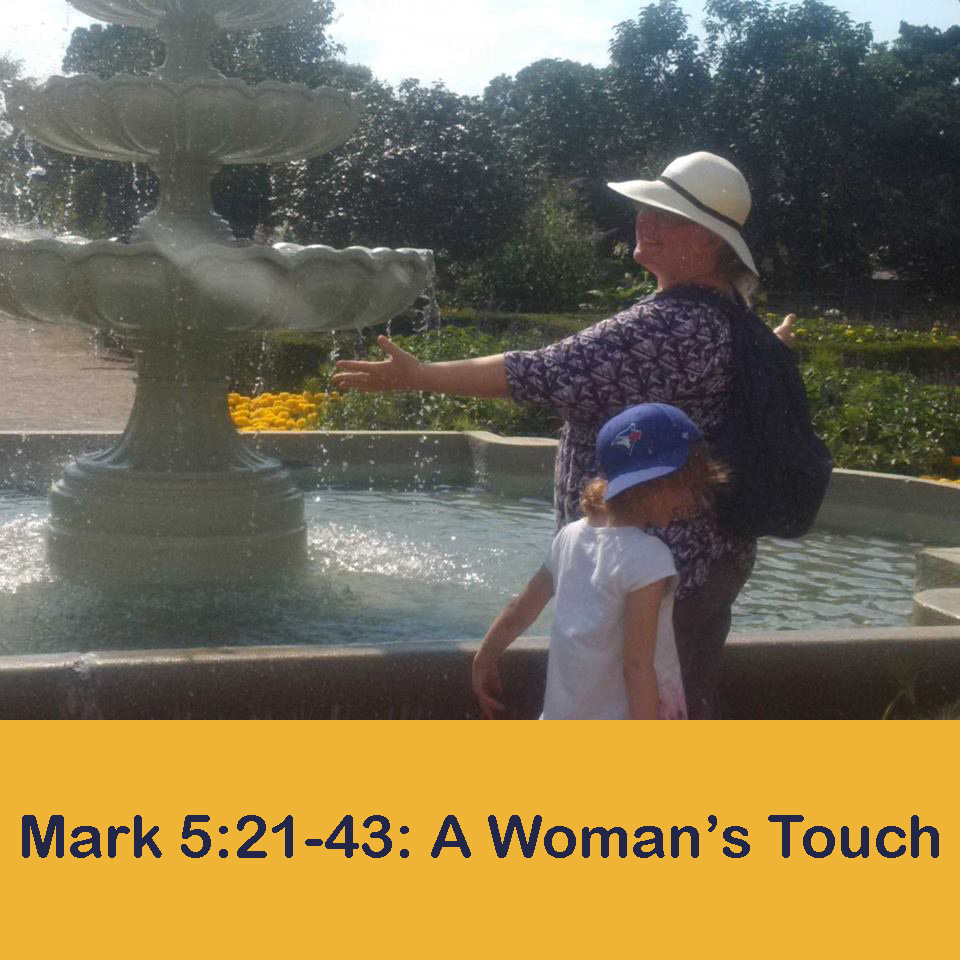
Mark 5:21-43: A Woman’s Touch.

Presented to 614 Warehouse Mission, 13 May 2018, Mother’s Day by Captain M Ramsay

For a Mothers’ Day promotion today the Blue Jay are giving away Pillar T-shirts with a Superman cape on them at the game. As cool as that sounded, we didn’t think that would be the best Mothers’ Day present for their mom. Susan is not necessarily the biggest sports fan.

The other day Sarah-Grace and I went to a Blue Jays game. It was a lot of fun. The good guys won. It was exciting. The Blue Jay were behind until their last at bat and then they just came to life. The scored 5 unanswered runs and won the game. It was exciting.

The day we went was the day after the Blue Jay pitcher, Osuna, was arrested and we did not know for what yet. Sarah-Grace and I support the Blue Jays and even before we moved to Toronto one thing Sarah-Grace always knew she wanted to do was to see a game; we don’t, however, know all that much about baseball. With Osuna arrested, we thought that they would be at quite a disadvantage without their pitcher. We especially thought that in the first inning when whomever the Blue Jays had pitching let the first runner score and then loaded the bases – I think maybe even without an out – all in the first half of the first inning. The guy pitching for the Jays seemed to be pitching so badly that everyone at the park would cheer if he even threw a strike! We thought and someone said, ‘wow this guy is so bad! Can someone break Osuna out of jail?’ It was only later in the game we realized that the Jays actually had a lot of pitchers as, I think, they put a new one in every inning down the stretch.

We also found out that the following night was supposed to be a giveaway night and they were going to be giving away free Osuna t-shirts: as he was in custody, someone asked if they were striped t-shirts. Another person asked if they came in prison orange. The truth is they decided not to give away Osuna t-shirts until after that whole mess has a chance to be cleared up – or not as the case may be. That is probably the best choice. We had a lot of fun at the game anyway.

It has been a fun time lately. Last night we had a lot of fun here at the talent show and I think the ladies all had a lot of fun at the women’s breakfast Saturday.

Today’s scripture, however, is about a lady who is not having a lot of fun until she met Jesus, anyway. Picture this scene from Mark 5 with me, as I read it again. Verse 24…:

A large crowd followed and pressed around him. 25 And a woman was there who had been subject to bleeding for twelve years. 26 She had suffered a great deal under the care of many doctors and had spent all she had, yet instead of getting better she grew worse. 27 When she heard about Jesus, she came up behind him in the crowd and touched his cloak, 28 because she thought, “If I just touch his clothes, I will be healed.” 29 Immediately her bleeding stopped and she felt in her body that she was freed from her suffering.
30 At once Jesus realized that power had gone out from him. He turned around in the crowd and asked, “Who touched my clothes?”
31 “You see the people crowding against you,” his disciples answered, “and yet you can ask, ‘Who touched me?’ ”
32 But Jesus kept looking around to see who had done it.   
33 Then the woman, knowing what had happened to her, came and fell at his feet and, trembling with fear, told him the whole truth. 34 He said to her, “Daughter, your faith has healed you. Go in peace and be freed from your suffering.”

This lady had been bleeding for twelve years. I’m not a doctor but that can’t be good. I love what the Bible says about the medical care she was getting too: it says, “She had suffered a great deal under the care of many doctors and had spent all she had, yet instead of getting better she grew worse.” 

Have we heard that story before? How many people here have suffered under the care of doctors? I can think of one doctor Susan had – I think Susan’s hand still doesn’t work properly. I am only thankful that in Canada, unlike Japan or the USA, medical care won’t cost us all we have to get absolutely no better. This was the lady’s case though. There was no Medicare in Roman Judea.

She had spent all her money and now she was ready to try anything. Can we relate to this desperation at all? I have had friends who were dying of cancer or other diseases, ailments, or causes, who tried everything that they could think of – whether they were covered by medical or not: herbal remedies; drugs: tested or not, legal or not; physiological remedies; psychological remedies;  tests done by universities; tests done by companies; studies where you might not even receive the potential drug but may be in the control group that gets a sugar pill; sometimes they fly to other countries where other doctors might try other procedures – at a cost…. This was this ladies plight. After 12 years, “She had suffered a great deal under the care of many doctors and had spent all she had, yet instead of getting better she grew worse.”

It was at this point that she sought out Jesus, Verse 27 on…
When she heard about Jesus, she came up behind him in the crowd and touched his cloak, 28 because she thought, “If I just touch his clothes, I will be healed.” 29 Immediately her bleeding stopped and she felt in her body that she was freed from her suffering.
Now this is interesting, and I think this is important. This lady isn’t just ‘throwing up a Hail Mary’, as they say. She hasn’t simply run out of every idea and just thought that I will try this too. When we have tried everything to solve a problem and then try one more thing, how much faith do we usually have that that one more thing will work? Not very much usually: Faith for many of us usually works in a diminishing capacity, the less success one has, the less success one expects. Example: we have elections in this country all the time: who thinks with each new election that everything is getting better and better? Not many people; that is why voter turnout is dropping. When we feel frustrated our faith in people or institutions or other usually falters.

This lady however, really believes that Jesus will save her. She has faith. “she thought, “If I just touch his clothes, I will be healed.” 29 Immediately her bleeding stopped and she felt in her body that she was freed from her suffering.” She had faith. She was freed.

This week, Susan and I were at the OCE Spiritual Retreat Day. Danielle Strickland was the guest speaker. Danielle and her husband Stephen Court actually send Susan and I into the work. We served with them in Vancouver’s DTES and they were the ones who signed off on us to go to CFOT, seminary, to become Salvation Army Officers.

She told us many interesting things and many very good stories, some of which I have heard before and some of the scenarios we had experienced ourselves, such as three hour prayer shifts on Vancouver’s DTES.

Danielle has also done a lot of work with especially women who were oppressed. She told us also about some men who were involved in activities that led to the oppression of women and how some of them had become oppressed themselves. One observation that she made was that the language of oppression is often lies. People who are oppressing others often lie to others and even themselves. And, she said, the currency of oppression is fear. This really resonated with me because I can think of a person recently who a number of us have experienced his less-than-truthfulness and we observed that this person seemed nervous, fearful, even speaking with us. (This is not to say that everyone nervous around you is lying, or oppressing you, or oppressed; there are lots of reasons to be nervous, this is just to say that God had revealed a real life object lesson to us about someone who seemed caught up in this oppression.) Danielle then said to us Officers that if you are feeling fearful in your agency and have seen a lack of honesty, maybe there is oppression in your organization. She said, Quoting 1 John 4:18, “There is no fear in love. But perfect love drives out fear…

The lady touched Jesus clothes and, Mark 5:29, ’Immediately her bleeding stopped and she felt in her body that she was freed from her suffering.’ This next part I think is important. Mark 5:20-34:

30 At once Jesus realized that power had gone out from him. He turned around in the crowd and asked, “Who touched my clothes?”
31 “You see the people crowding against you,” his disciples answered, “and yet you can ask, ‘Who touched me?’ ”
32 But Jesus kept looking around to see who had done it.
33 Then the woman, knowing what had happened to her, came and fell at his feet and, trembling with fear, told him the whole truth. 34 He said to her, “Daughter, your faith has healed you. Go in peace and be freed from your suffering.”

There actually are a couple of things here to consider. Jesus asked who touched his clothes. There were lots of people touching his clothes. People were pressing up against him. People wanted to get his attention. People wanted to get his help. People wanted to get his healing. You can probably imagine the incredulousness of the disciples here. This story we are looking at today is actually a part of another story, don’t forget.  Jesus is on his way to heal Jairus’ daughter. She is about to die. The disciples could be in a bit of a hurry here.  There is a girl who could die if they don’t get there. 

Anyone ever been in a hurry? Anyone ever had to wait for someone when you are running late and really just want to get going? Have you ever sat in the car or stood by the door waiting for someone to get their coat, find their shoes or do their hair? Have you ever looked at your watch and wondered why are they making us late? Here the disciples seem to be in a bit of a hurry and all of a sudden Jesus, instead of moving along, stops in the middle of a crowd of people touching him and says, ‘who touched me?’

You can see how the disciples might be a little bit frustrated like a husband or a dad trying to herd hi kids in the car. Hurry up! We’re going to be late. Hurray up! I don’t want to be late. Hurry up! We don’t want to miss it. In this case, hurray up Jesus or the girl we’re racing off to heal will die! And she did, while Jesus stopped to look for one person who touched him while everyone was touching him in the crowd.

People were swarming around and bumping into Jesus and everyone else. One lady, however, this lady, reached out her hand to touch his cloak with the intention to be healed. This was an intentional act to seek healing. The disciples were asking Jesus what He is talking about: all kinds of people are touching you. Jesus though is surveying the crowd; he is looking for who it is that reached out and grabbed hold of the healing spirit of God. The disciples may not have understood but the lady did and she came forward. She was afraid; she had been oppressed with this condition for years. Remember she had spent time and all her money seeking freedom from this oppression. NT Wright reminds us that this story is one of both faith and fear.

This lady was afraid as she looked at our Lord who had just healed her (I don’t want to say by accident but certainly by her reaching out to him). This lady comes forward. She comes clean to the Lord who has just made her clean. The Scriptures say, Verse 33…:

Then the woman, knowing what had happened to her, came and fell at his feet and, trembling with fear, told him the whole truth. 34 He said to her, “Daughter, your faith has healed you. Go in peace and be freed from your suffering.”
This woman by facing Jesus faced the fear that was oppressing her through her ailment and possibly other ways as well and Jesus drove it from her. 1 John 4:18, “But perfect love drives out fear…” Jesus loves her: she is freed from her suffering. 1 John 4:18, “perfect love drives out fear…” Jesus’ love drove out her fear and Jesus said to her “Go in peace and be freed from your suffering.”  And she was.

And more than that: the girl who died while Jesus was looking for this lady, Jesus raised her from the dead. He brought her back to life. Nothing is too difficult for God.

Jesus freed the lady in our text today from her fear and her suffering. Jesus can free you from your fear and your suffering. I know there are many people here who are fearful of and suffering from many things. Specifically in the last few weeks, I have heard people express that even some in this organization have apparently, seemingly, possibly been less than open with all of us about what is going to happen. When is River Street going to closed? I don’t know. Who is going to lose or keep their jobs? I don’t know. Which ministries will continue? I don’t know. Will this service continue here on Sundays? I don’t know. I don’t know if anyone knows. If they do know, they have not been clear and they have not been honest; they have preferred darkness to light and lies to truth, fear to faith and oppression to freedom. But even if this is so and the devil is trying to cause the faithful here to hemorrhage, we don’t need to because as we reach out our hands to the Lord like the lady who had been suffering for 12 years did, then God promises that He will turn the darkness to light, the lies to truth, the fear to faith and oppression to freedom.

This is true in all matters in our daily life as well. If there is anything that is oppressing us, the Lord can deliver us. If there is anything at all that is oppressing you and I in our lives here such as the lady in our text today was oppressed, The Lord can deliver us from whatever it is! He is the one who can turn the darkness to light, the lies to truth, the fear to faith and oppression to freedom!

Do you believe this? If so than let us each reach our hand in faith as we pray: Dear God, in my life, please turn the darkness to light, the lies to truth, the fear to faith and oppression to freedom.  Please let me experience the perfect love that drives out all fear and the salvation that comes from you alone both for now and forever more. Amen.

Let us go from here in peace and be freed from our suffering because perfect love drives out fear.

daily blogs at
 ---
[1] Cf. William Hendriksen, Mark (New Testament Commentary: Baker Academic: Grand Rapids, Michigan: 2007), 203 and NT Wright Mark for Everyone: Chapters 1-8 (Louisville, US: WKJ, 2004)[2] Walter W. Wessel Expositor’s Bible Commentary, Pradis CD-ROM:Mark/ Book Version: 4.0.2: Mark 30-32[3] NT Wright Mark for Everyone: Chapters 1-8 (Louisville, US: WKJ, 2004)